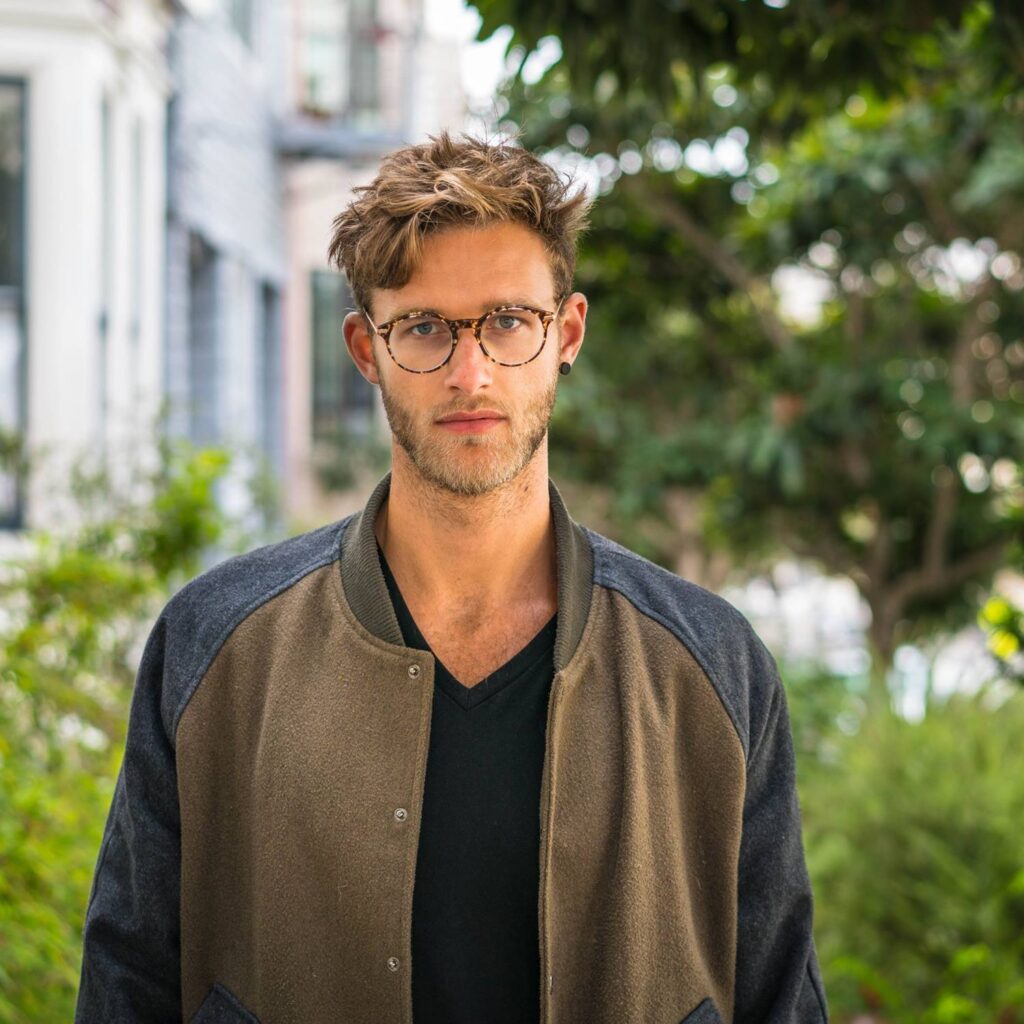
For Bastian Schmiedecke, a doctoral researcher at Helmholtz-Zentrum Berlin, the RAC International Summer School offered an opportunity to expand his scientific toolkit, build international connections, and gain fresh perspectives on sustainability, research communication, and collaboration. The experience deepened his understanding of neutron-based research methods and provided memorable personal experiences, and friendships, that he expects to carry with him throughout his career.
Born in Berlin, Bastian studied chemistry at Humboldt University of Berlin, where he completed both his bachelor’s and master’s degrees. Alongside his scientific interests, he is also a musician, music producer, and board game developer. Today, he is completing his doctoral research in electrochemistry and materials science at Helmholtz-Zentrum Berlin, where he focuses on developing catalysts for green hydrogen production through electrolyzer technologies.
Bastian first learned about the RAC International Summer School through an email distributed by the graduate center at Helmholtz-Zentrum Berlin. Having extensive experience with synchrotron-based X-ray facilities, he was eager to learn more about neutron-based techniques and the possibilities they offer for materials research. The fact that the summer school took place in Sweden, a country he had never visited before, provided an additional motivation to apply.
Entering the program, he expected a week filled with stimulating scientific discussions and opportunities to meet new people. As someone who genuinely enjoys the social aspects of scientific events, he was looking forward not only to the lectures but also to the interactions between participants from different backgrounds and disciplines.
The summer school delivered on those expectations and more. Through lectures and workshops, Bastian gained valuable insight into how specific analytical methods can be applied to different scientific challenges. In particular, he was fascinated by neutron- and muon-based techniques, which introduced entirely new approaches to data interpretation and analysis. These methods opened up new possibilities for addressing questions within his own research field.
Among the many highlights of the scientific program, the keynote lectures stood out most strongly. Bastian describes them as enlightening and inspiring experiences that will stay with him for a long time. He also found the workshop on presenting research particularly valuable, providing practical guidance on how to communicate and pitch scientific work effectively. Another session that left a lasting impression was Nolen Gertz’s talk, Beyond AI Solutionism, which encouraged participants to think critically about emerging technologies and their broader societal implications.
The summer school also influenced how Bastian thinks about sustainability. One idea that particularly resonated with him concerned electric vehicles and energy systems. He reflected on the fact that if the electricity used to charge electric cars originates from fossil fuels, society risks moving from a fossil-fuel-intensive economy to one that is both fossil-fuel- and material-intensive. The discussions also encouraged him to reconsider the materials he studies and evaluate whether neutron-based techniques could help answer important questions within his own research. [
When discussing the future of sustainable technologies, Bastian points to the growing demand for lithium as one of the major challenges facing battery development. He believes that future solutions must increasingly focus on more abundant materials and resource extraction methods that do not cause severe environmental damage. Addressing these challenges, he argues, will require strong international collaboration. In his view, science has always been a global endeavor, and diverse perspectives are essential for solving complex problems. The more researchers from different fields and backgrounds work together, the better equipped they are to find innovative solutions.
Looking ahead, Bastian expects the RAC Summer School to have a tangible impact on his future career. The training and knowledge he gained have given him the confidence to apply for beamtime at neutron facilities and a much clearer understanding of how to develop future experimental proposals. The professional network he built during the school is equally important. Through conversations, shared experiences, and new friendships, he established connections that he believes will continue to influence his scientific path in the years ahead.
In the immediate future, Bastian is focused on completing the final stages of his doctoral research and preparing for his PhD defense. Afterward, he will continue his academic journey as a postdoctoral researcher in Valencia, Spain, where he will work on electrocatalysis for the generation of value-added products. His long-term aspiration is to return to Berlin, continue conducting research, and potentially lead a research team within academia.
Reflecting on the overall experience, Bastian emphasizes that the RAC Summer School provided far more than scientific knowledge. Academically, it introduced him to new techniques, expanded his professional network, and offered valuable insights into how research is conducted across different institutions and countries. Personally, it enabled him to form friendships across Europe and engage in conversations that extended well beyond science, enriching both his professional and personal life.
His advice to future participants is simple: apply, ask as many questions as possible during the lectures, and make an effort to speak with every participant at least once. For Bastian, some of the most valuable moments happened outside the lecture hall, where informal discussions often led to unexpected insights and lasting connections.
If he had to summarize the RAC Summer School in three words, his choice would be unforgettable: Moonlight-swimming. Hangpressed. Sauna.
As he reflects on the experience, one aspect stands above all others:
“The connections, the laughs, and the midnight swims will forever stay with me.” [
For Bastian, these memories capture what made the RAC International Summer School truly special: a combination of scientific discovery, international friendship, and experiences that extend well beyond the laboratory.