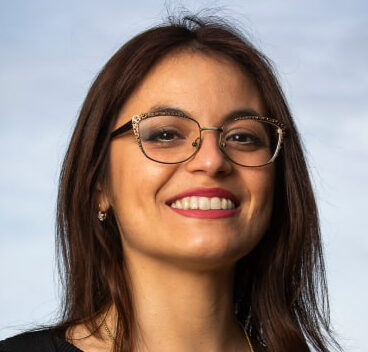
Elisabetta’s journey into science did not begin in physics, but in classical studies. Since then, her path has taken her through neutron and synchrotron experiments at large-scale facilities around the world, a PhD at KTH within SwedNess, and into research on materials for climate solutions. In this interview, she shares the experiences, lessons, and values that have shaped her career, and reflects on the role SwedNess has played along the way.
You started in classical studies before moving into physics. What inspired that transition?
I was initially drawn to classical studies because of their intellectual depth. Over time, though, I realized that I wanted to engage with something more firmly grounded in measurable reality. What attracted me to physics was the fact that, in the end, ideas have to stand up to experiment. You cannot argue with the data.
I find that very compelling. Physics offers a clear and honest way of approaching nature: you try to understand its beauty, but always through evidence. That combination of rigor and wonder is what ultimately drew me to it.
During your PhD at KTH within SwedNess, you worked at several large-scale neutron and synchrotron facilities worldwide. What was your most memorable experiment?
One of the most memorable experiments of my PhD was our inelastic neutron scattering study of LaPt2Si2. I had been searching for phonon softening in this material for almost two years, so finally seeing it was a very exciting moment.
What made it especially memorable was that there had been confusion in the literature about the charge density wave transition in LaPt2Si2 (whose signature is phonon softening). At some point, by comparing published results with our own work, I realized that the transition had been discussed in the wrong temperature range. That led me to propose a new measurement at high temperature, using a triple-axis neutron spectrometer with a furnace.
When we finally observed the softening, it was a very satisfying result. It was the first direct evidence of the precursor to the high-temperature charge density wave transition, it confirmed a long-standing theoretical prediction, and clarified a debate around this material.
What is one key lesson you learned during your PhD that still guides you today?
One important lesson I learned during my PhD is that technical skill is not the only thing that matters for progress. A big part of it is the ability to work with people, communicate clearly, and navigate different personalities and situations. That skill is something I developed widely during my life and it came in really handy while carrying out my PhD. I rely on it every day.
I also learned something important about myself: I have a huge inertia, which is the reason why I am very persistent, but it also implies that I need to put effort into finding the right direction. Finally, my PhD taught me not to compromise on my core values. In research, as in life, integrity matters, and staying true to your values is essential for doing meaningful work, surrounding yourself with the right people, finding the environment where you can thrive, and building a reputation you can be proud of.
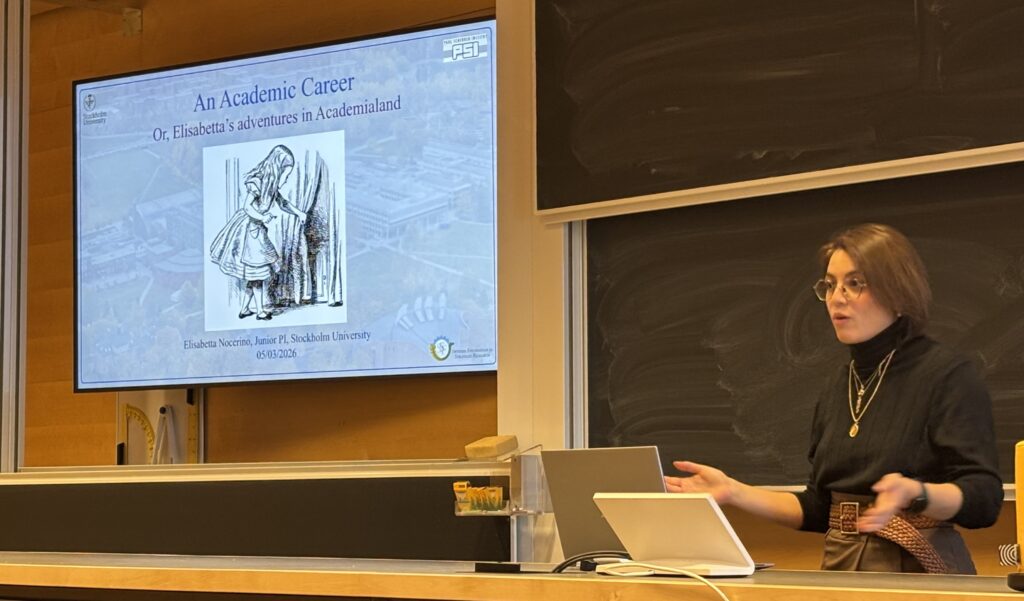
You secured an SSF grant even before graduating. What helped you prepare for that step?
One thing that helped me prepare was having a PhD supervisor who is very strategic and highly successful in securing grants. I learned a great deal from him, watching how he thought about research directions, timing, and positioning. I also learned how to develop good scientific ideas, communicate their value clearly and choose suitable funding agencies effectively.
Your current research focuses on super-insulating nanocellulose and carbon capture materials. What motivated this shift toward climate-related research?
I have always wanted my research to contribute to climate remediation. My PhD work also had a strong sustainability angle, through multifunctional materials relevant to areas like spintronics and batteries. What drew me to this new direction was the chance to work on materials that are even more directly connected to practical climate solutions. Research on super-insulating nanocellulose and carbon-capture materials makes that connection very tangible, which is something I find highly motivating.
How has your experience with neutron techniques shaped your scientific profile?
My experience with neutron techniques has shaped my scientific profile in several ways. Scientifically, it gave me a very direct way to connect microscopic dynamics and structure with the physical properties of materials. More broadly, working with neutron scattering taught me how to prepare carefully, think strategically, and make decisions under the pressure of limited beamtime, where every minute counts.
It also made me a more collaborative scientist. Large-scale facilities bring together people with different expertise, so I learned how to work across disciplines, communicate clearly, and adapt quickly.
What advice would you give to current and future SwedNess PhD students?
My advice would be: go for it if you genuinely enjoy research and want to pursue an academic career. SwedNess offers a very strong environment and great possibilities, but it is important to be intentional about how you use them and think in advance. Basically, do not be sloppy, be strategic. Think carefully about your projects, your collaborations, and the skills you want to build. Opportunities will come, but making the most of them means being ready when they arrive.